Bio & press kit
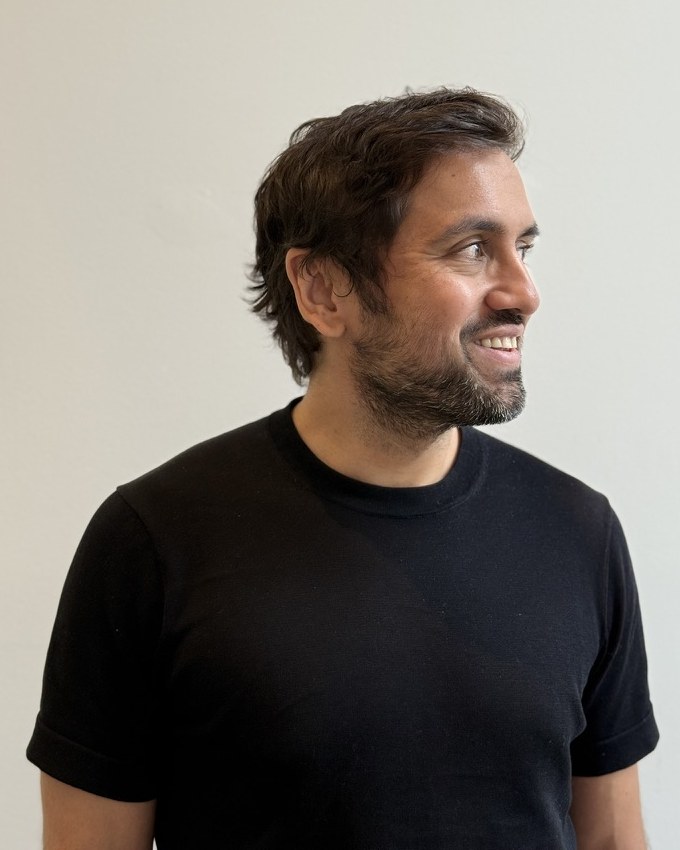
Amar C. Bakshi
Amar C. Bakshi is a Brooklyn-based artist, entrepreneur, and institutional strategist who designs new ways for people to connect across difference.
In 2014 he painted a shipping container gold, filled it with life-size real-time video, and connected it to an identical room on the other side of the world. That became Shared Studios, which has since linked more than a million people through over 100 Portals across 42 countries — in Times Square and Herat, in refugee settlements in Jordan and Uganda, in Milwaukee and Gaza City. Portals have hosted Barack Obama, Bill Gates and Malala Yousafzai alongside refugees, students and neighbours meeting for the first time. Partners have included the United Nations, the Smithsonian, Google, NASA and the Obama Foundation. PBS made a documentary about it.
He co-led the Portals Policing Project with Tracey Meares at Yale and Vesla Weaver at Johns Hopkins, turning the Portals into a listening instrument: residents of fourteen heavily policed neighbourhoods across six cities talked to each other rather than to researchers, producing more than 850 conversations — at the time the most extensive collection of first-hand accounts of policing in America assembled.
The work split as prototypes became infrastructure. The presence technology behind the Portals became Noro, which brings life-size presence to the workplace. He is co-founder and chief creative officer of Andus Labs, which builds the organisational readiness that lets AI investment actually deliver, for clients including Google, Moody's and Notre Dame. He is a partner at Portfolio, a special projects studio for democracy operating under Allied, incubating civic and cultural experiments that could not exist inside conventional institutions. And he co-leads New Social Forms at the MIT Center for Constructive Communication, where he is an artist and entrepreneur in residence.
He continues to make work. Media Diet, an immersive installation co-created with Heidi Boisvert, rebuilds the living rooms of three real Americans and plays the same news story through three incompatible realities; it opened at Twenty Summers in Provincetown. Earlier, The Legal Medium — a symposium he founded at Yale — examined artists who use law itself as a creative material, and produced published legal and academic work on art, law and technology.
He came to this from journalism and government. As a reporter at The Washington Post he travelled through a dozen countries asking people how they saw America, and covered race and identity during the 2008 presidential campaign. He was managing editor of CNN's Global Public Square with Fareed Zakaria. At the United States Mission to the United Nations he served as special assistant to Ambassador Susan Rice, including on the U.S. response to the H1N1 pandemic. In Zimbabwe he spent a year researching how a government took control of the culture in order to control the media.
He holds an AB from Harvard, an MA from Johns Hopkins SAIS, and a JD from Yale Law School. He is a Truman Scholar, a Soros Scholar, and a Fellow of the Johns Hopkins SNF Agora Institute. He holds nine U.S. patents. He serves on the board of Refounding America, the Board of Governors of St. Albans School, and the steering committee of the YLS Alumni Strengthening Democracy Network.
Short bio
For programmes and introductions · 80 words
Amar C. Bakshi is a Brooklyn-based artist and entrepreneur who designs new ways for people to connect across difference. He founded Shared Studios, whose gold Portals have linked more than a million people across 42 countries, and co-leads New Social Forms at MIT. He is co-founder and chief creative officer of Andus Labs and a partner at Portfolio, a special projects studio for democracy. He previously reported for The Washington Post and was managing editor of CNN's Global Public Square.
One line
For panels and bylines
Amar C. Bakshi designs new ways for people to connect across difference — through Shared Studios, Noro, Andus Labs, Portfolio, and New Social Forms at MIT.
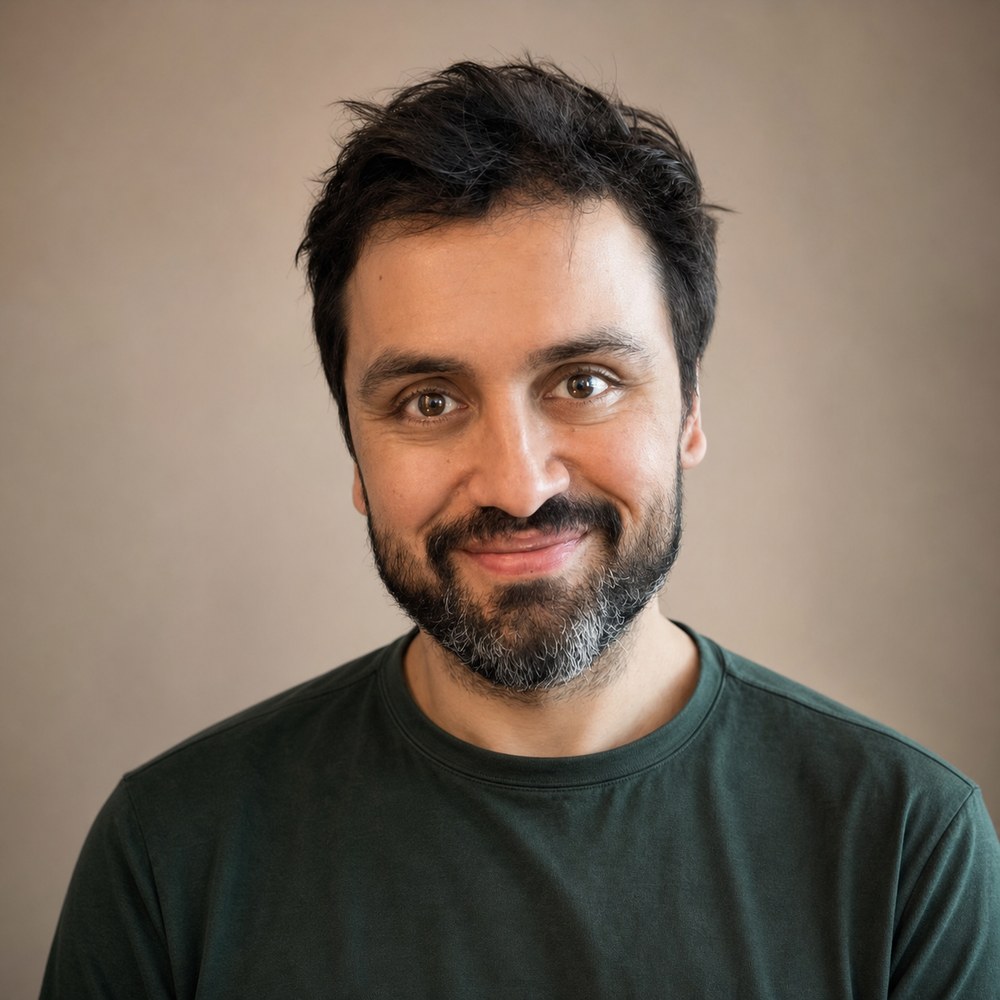
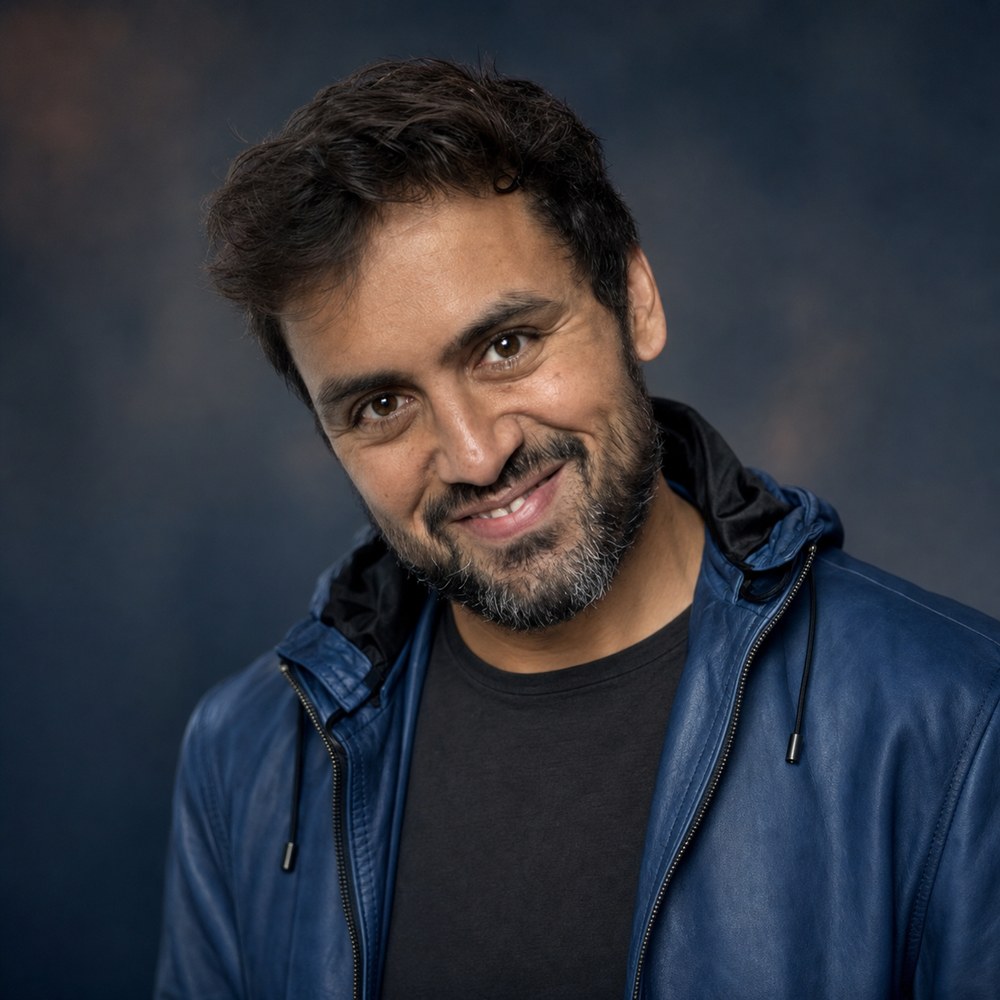
Headshots
Right-click to save · please credit as noted
Elsewhere
Coverage and contact
Press archive — 270 pieces, 2006–2026.
Talks and patents.
Get in touch.