
How the World Sees America · The Washington Post
I asked one question in a dozen countries.
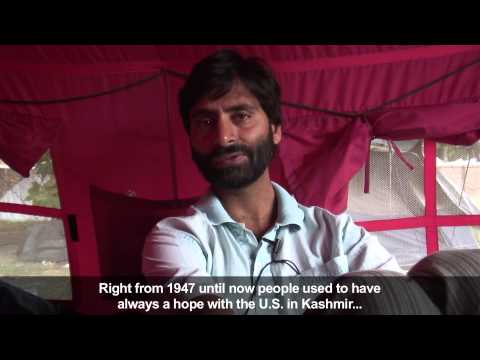
I was hired out of college by David Ignatius and Fareed Zakaria as the first editor of PostGlobal, the Washington Post's international affairs site. For months I commissioned and edited expert commentary about the world, and gradually concluded that the thing missing from all of it was people.
So I asked my editors to send me away for a year. The proposition was simple enough to fit in a sentence: go to a dozen countries and ask people what they make of America. Not officials — or not only officials. A drag queen in Karachi. A rapper in Beirut. Call center workers in Bangalore. A Filipina sex worker's daughter. A general who fortified Venezuela against a U.S. invasion he was certain was coming. A man in Mexico who became a drug-runner to feed his children. My grandmother.
I wrote and filmed. The video mattered because a transcript cannot carry a face changing its mind.
The series doubled PostGlobal's traffic, which mattered internally because it demonstrated that in-depth international reporting could pay for itself. Other projects at the Post were modelled on it. Fareed called it groundbreaking. But the reason I still think about it is narrower than any of that.
My parents came to America from India determined that I be wholly American. I was kept from Hindi, from other Indian families, from my grandparents — influences they considered backward. Fifteen years later the Washington Post paid me to go back and interview my Dadi Ma about how she saw the country I had been raised to belong to. That was in the series, filed alongside Ahmed Rashid and a Hezbollah leader's daughter.
The year
The stories
India
- How India Sees America
Kashmir
Pakistan
- Ahmed Rashid: Bush Didn't Listen Video
- Begum Nawazish Ali - Drag Queen Defies U.S. Video
Turkey
- Metal Storm: Imagining U.S.-Turkey War Video
- Two Kurdish Turks: Waiting for U.S.
- How Turkey Sees America
- Mixed Reviews for U.S. from Erdogan's Old Home Video
- Turkish General Edip Baser: America Must Fight PKK
Turkey & USA
- Finding an Islamic Movement on Santa Monica Beach
- Turkish Kurd Praises Ocean City Multiculturalism
Lebanon
- Lebanon's Hip-Hop Struggle
- An American Sister & Israeli Bombs Video
- Hezbollah, Her Protector Video
- Lebanon's Politicians: Avoiding the Assassins
Israel
- Americans Don't 'Get' Terrorism Video
- Israel's Silicon Valley
- American-Israeli Settler Holds Out in Hebron Video
- Welcome To Israel
South Korea
- Korea's American Saviors Video
- Dear (American) Leader
Philippines
- Child of a Filipina Prostitute: “The Dirt of the Americans” Video
- Little America, in Manila
- McMinister: Playing the 'White' Card Video
- Filipino Colonel to America: Reinforcements Welcome
Venezuela
- The Hyphenated American
- Student Leader Says Back Off, Bush Video
- General Fortifies Venezuela Against the U.S. Video
Mexico
- The View from the Border
- Hector, Father Turned Drug-Runner
- What came next
- Race in '08 — the same method turned inward, travelling the United States as it chose its first Black president.
- Commissioned by
- The Washington Post · PostGlobal, with David Ignatius and Fareed Zakaria